Remembering Brigitte
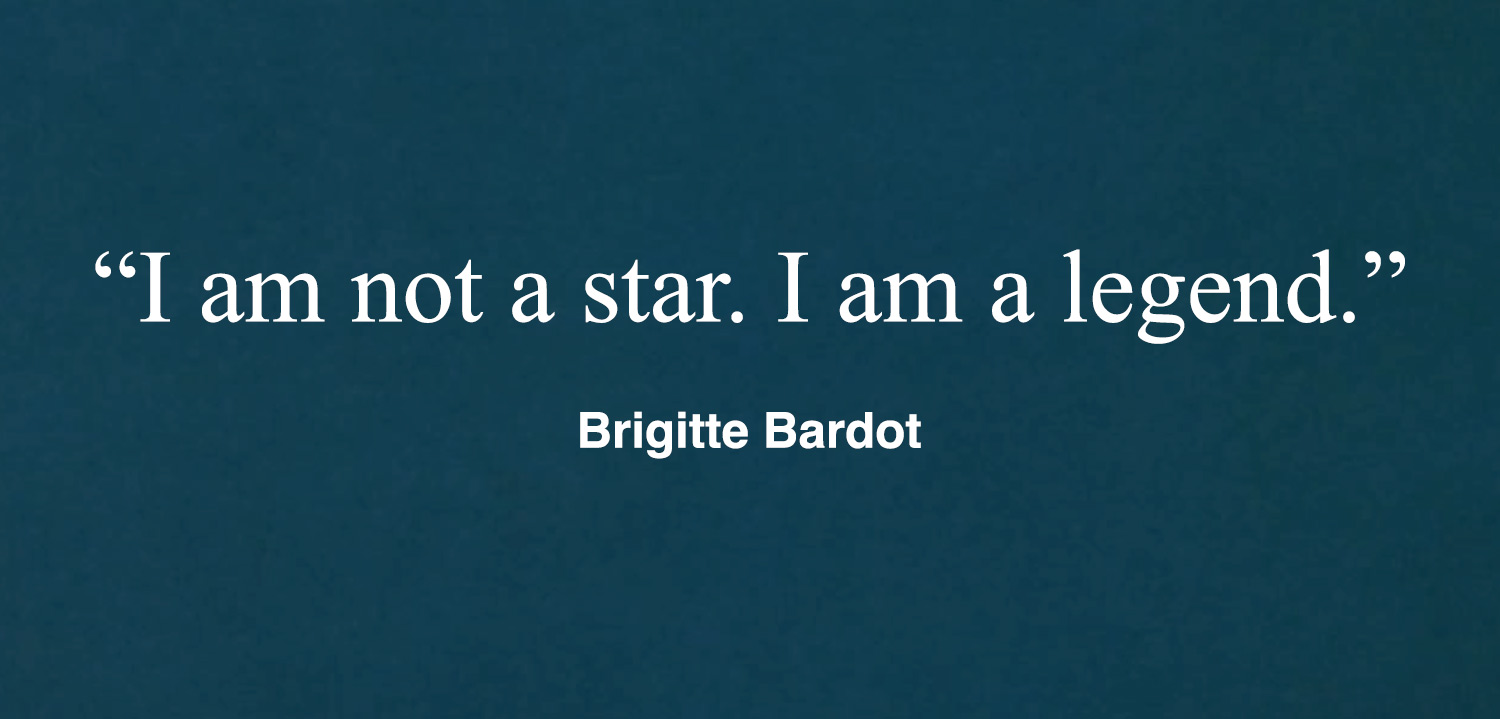
Brigitte Bardot who once had ambitions to become a ballet dancer changed the way that we viewed France and their 20th Century, post-war art scene forever. She was the face of France, a different form of feminism and led an animal rights activism that still is talked about today.
Since her passing in December of 2025, much has been written about the star, the successes, the challenges and the controversy that followed her.
Her big break came in the 1956 film, And God Created Woman. Shot in St.Tropez, she placed the town on the map yet, cinema didn’t quite know what to do with her. She was not your typical actress. She didn’t behave like one and instead of seducing, she existed… unapologetically. Bare feet. Uncombed hair. A body that didn’t ask permission to be stared at. The camera followed because it had no choice.
It would be this appearance and her much storied – young – marriage with director Roger Vadim that turned her into the emblem of post-war sensuality and modern cinema.
More iconic roles in films like, Contempt (1963), Viva Maria! (1965), and Masculin-Féminin (1966), showcasing her rise from French starlet to international sex symbol, with her final film being The Edifying and Joyous Story of Colinot (1973) before her retirement.
Her film career was not like the contemporaries of her time. Carefree, natural and effortless was more her style. She played to the sexual liberation and she personified the “ambiguous nymph” so easily in her portrayals that made her on-screen charm even more captivating. She once famously quipped, “Men want me. Women hate me” which would be hard to never underplay in her life.
Much like the transformation of Europe and European culture – both on screen and off – Bardot would leave the world of cinema in 1973 aged just 39. Finding stardom and the attention it put on her “irksome” telling the Guardian in 1996: “The madness which surrounded me always seemed unreal. I was never really prepared for the life of a star.”
Attention instead would shift to animal rights activism, a proud and outspoken champion of animals, she joined protests against seal hunts in 1977 and established the Brigitte Bardot Foundation in 1986.
Bardot subsequently sent letters of protest to world leaders over issues such as dog extermination in Romania, dolphin killing in the Faroe Islands and cat slaughter in Australia.
Whilst controversy, court appearances and racial hatred convictions would follow her in later life – albeit early career moves saw her stand shoulder-to-shoulder with Jean Marie Le-Pen and the
National Front – Bardot remained to many an enigma of European cinema, French beauty and counter-feminist culture. She was outspoken, polarising, and non-conformist.
Tributes following her death came from cinema, politics, and far beyond France – including the Italian ministry, a rarity of the two nations collaborating – undeniably a global star if any could be reckoned with.
Brigitte Bardot does not leave behind a legacy that asks to be agreed with. She leaves one that demands to be reckoned with. A woman who reshaped how desire was filmed, how freedom looked, and how fiercely a single person could cling to their own moral compass — even when it veered into isolation.
She was not softened by age. She did not seek redemption arcs. She refused to become palatable.
Perhaps that is why she endures.
Icons, as they say, are rarely comfortable and legends almost never without a good story that follows.